
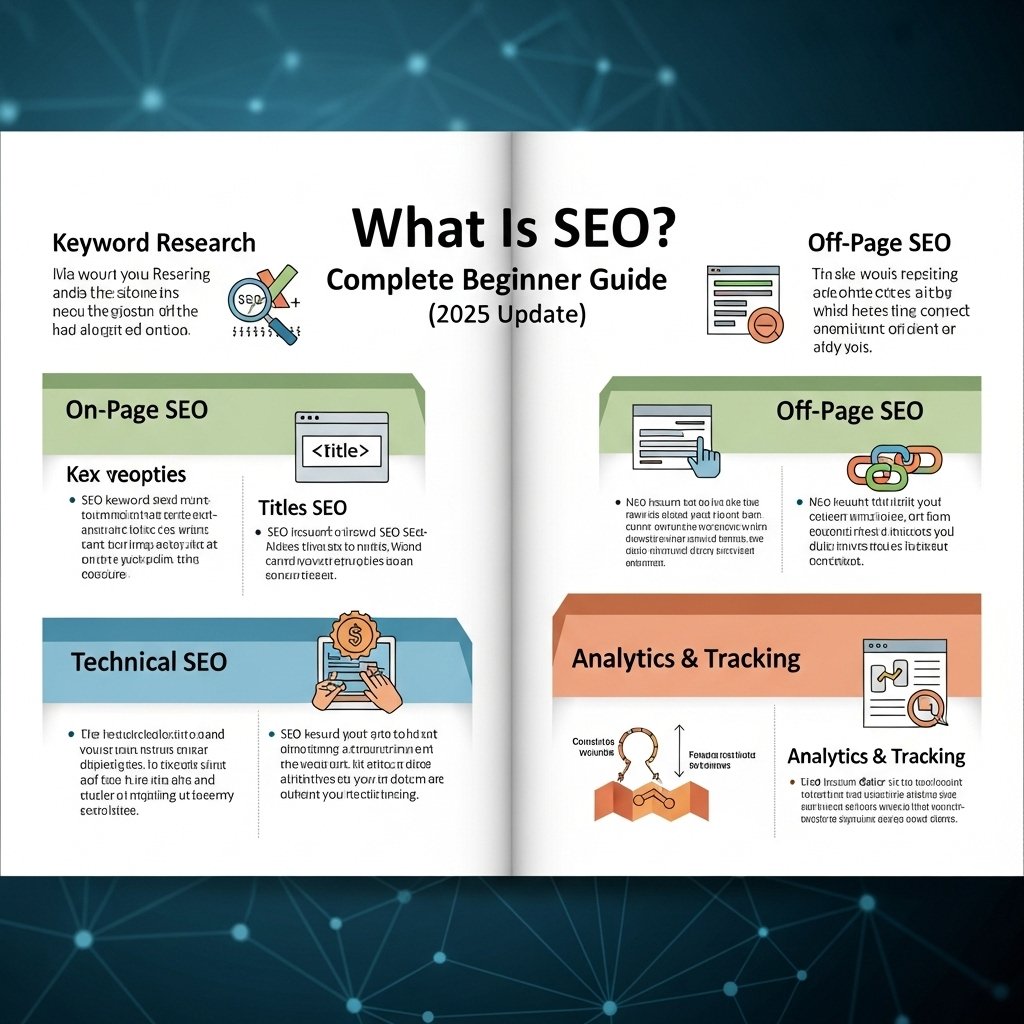
Search Engine Optimization—better known as SEO—is one of the most powerful, long-term, and cost-effective digital marketing strategies businesses can use in 2026. Whether you run an online store, a local service business, or a growing digital brand, SEO helps you attract free, consistent, and high-quality traffic from search engines like Google.
This complete beginner guide explains SEO in a simple, professional, and easy-to-understand way—perfect for business owners, beginners, and anyone starting their digital marketing journey.
Introduction: Understanding SEO in Simple Terms
SEO stands for Search Engine Optimization. It refers to the process of improving your website so it ranks higher on search engines. When people search for something related to your business (for example, “best website design services” or “SEO company near me”), SEO helps your website appear on the first page.
In easy words:
👉 SEO = making your website more visible on Google so more people can find you.
Good SEO brings:
-
More organic traffic
-
More leads and sales
-
Higher brand authority
-
Long-term business growth
In 2026, SEO is more important than ever due to increasing online competition, smarter customers, and rising advertising costs.
Why SEO Matters in 2026
The internet has become the first place customers go before buying anything. If your business isn’t visible on Google, you’re losing opportunities to competitors.
Key Reasons SEO is Essential Today
1. Free and Sustainable Traffic
Unlike paid ads, SEO keeps bringing visitors without ongoing costs.
2. Higher Trust and Credibility
People trust Google’s top results. Ranking higher improves brand reputation.
3. Better User Experience
SEO ensures your website is fast, easy to navigate, and mobile-friendly.
4. Higher Conversions
Visitors from Google already know what they want—making them ideal leads.
5. Competitive Advantage
Businesses that invest in SEO dominate their markets long-term.
Example:
A local dentist that ranks #1 for “Dentist in Lahore” will naturally get more bookings than a dentist ranked on page 3.
How Search Engines Work (Simple Explanation)
To understand SEO, you need to know how Google decides which websites appear at the top.
Step 1 — Crawling
Google uses bots (called spiders or crawlers) to scan websites and read their content.
Step 2 — Indexing
After scanning, Google stores the website pages in its massive database (index).
Step 3 — Ranking
When someone searches for something, Google analyzes millions of pages and ranks them based on:
-
Relevance
-
Content quality
-
User experience
-
Authority
-
Search intent
Your goal with SEO is to make your website helpful, trustworthy, and easy to understand—so Google ranks it higher.
Types of SEO (Beginner-Friendly Breakdown)
SEO has three major components. Learning these helps you build a complete strategy.
1. On-Page SEO
This involves optimizing everything on your website.
Examples include:
-
Using the right keywords
-
Writing helpful content
-
Adding headings
-
Optimizing images
-
Improving internal links
-
Using clean URLs
Example:
A page targeting “website design for small business” should explain website design clearly, list features, show benefits, and match the reader’s expectations.
2. Off-Page SEO
This focuses on building your website’s authority outside your website.
Includes:
-
Backlinks (other websites linking to yours)
-
Social media signals
-
Brand mentions
-
Guest posting
-
PR articles
Google ranks trusted websites higher. Backlinks act like “votes of confidence”.
3. Technical SEO
Technical SEO ensures your website is easy for Google to crawl and understand.
Includes:
-
Fast website speed
-
Mobile responsiveness
-
Secure HTTPS
-
Sitemap
-
Clean navigation
-
No broken links
A technically strong website improves both ranking and user experience.
SEO Ranking Factors That Matter in 2026
Google makes thousands of algorithm updates every year. But these remain the most important factors for ranking:
1. High-Quality, Helpful Content
In 2026, Google favors content that:
-
Answers user questions clearly
-
Offers real solutions
-
Provides value
-
Uses simple language
Quality beats quantity.
2. Search Intent Optimization
Your content must match what users expect.
Types of search intent:
-
Informational: “What is SEO?”
-
Commercial: “Best SEO tools 2026”
-
Transactional: “Buy website design services”
-
Local: “SEO consultant near me”
Google ranks pages that satisfy user intent.
3. Website Speed
Slow websites lose visitors and rankings. Aim for:
-
< 2-second load time
-
Optimized images
-
Clean code
-
Lightweight themes
4. Website Authority (Backlinks)
High-quality backlinks from trusted websites significantly improve your ranking.
5. Mobile-Friendliness
Most searches happen on mobile. Your website must:
-
Load quickly
-
Look clean
-
Be easy to scroll
-
Have clear buttons
6. User Experience (UX)
Google evaluates:
-
Bounce rate
-
Time on page
-
Navigation
-
Readability
A good user experience boosts SEO naturally.
Keyword Research: The Starting Point of SEO
Keyword research helps you discover what people search for related to your business.
Why Keyword Research Is Important
-
Shows customer interests
-
Helps you plan content
-
Helps Google understand your website
-
Attracts highly targeted visitors
Simple Keyword Research Method (Beginner-Friendly)
Ask yourself:
-
What do my customers search for?
-
What problems do they want solutions for?
-
What services do I provide?
Then start with beginner-friendly tools:
-
Google Search Autocomplete
-
AnswerThePublic
-
Google Keyword Planner
Example Keywords for Digital Marketing Agencies
-
“website design services for small business”
-
“local SEO services 2026”
-
“AI automation for small business”
-
“lead generation strategies”
-
“best SEO tools for beginners”
Use them naturally—not forcefully.
On-Page SEO: Step-by-Step Guide for Beginners
On-page SEO is where beginners see the fastest results.
Here’s how to optimize your website:
1. Use an SEO-Friendly Title
Example:
“Website Design Services for Small Businesses | Affordable & Professional”
2. Write a Clear Meta Description
A short 150–160 character summary.
Example:
“Get affordable website design services to grow your small business. Fast, mobile-friendly, SEO-optimized websites designed for conversions.”
3. Use Headings Properly (H1, H2, H3)
They help Google understand your content structure.
4. Add Keywords Naturally
Focus on user experience—not keyword stuffing.
5. Optimize Images
-
Use descriptive file names
-
Add alt text
-
Compress large images
6. Use Internal Links
Link your pages together to help Google crawl your site.
7. Make Content Easy to Read
-
Use short paragraphs
-
Add bullet points
-
Use simple, professional language
Off-Page SEO: Building Trust and Authority
Off-page SEO takes time but delivers long-term results.
Best Off-Page SEO Strategies in 2026
-
High-quality backlinks
-
Social media sharing
-
Guest posting
-
Brand mentions
-
Online reviews
-
PR articles
-
Collaborations with influencers
Focus on quality—not quantity.
Technical SEO: Strengthening Your Website’s Foundation
Technical SEO ensures your website works well for both users and search engines.
5–7 Key Technical SEO Tasks for Beginners
-
Use HTTPS
-
Make your website mobile-friendly
-
Improve page speed
-
Fix broken links
-
Use clean URLs (example.com/services)
-
Install an SEO plugin (if using WordPress)
-
Submit sitemap to Google
These are simple but highly effective improvements.
Local SEO: Critical for Local Businesses in 2026
Local SEO helps your business appear in Google Maps and location-based searches.
How to Improve Local SEO
-
Create a Google Business Profile
-
Add photos, services, and business hours
-
Get customer reviews
-
Use local keywords
-
Add your address and phone number
-
List your business in directories
Example searches:
-
“website designer near me”
-
“digital marketing agency in Karachi”
-
“best dentist in Lahore”
Local SEO is extremely powerful for service-based businesses.
5–7 Practical SEO Tips for Beginners (2026 Edition)
-
Publish helpful, high-quality content consistently
-
Use simple, clear, SEO-friendly titles
-
Optimize your images and website speed
-
Add internal links between related pages
-
Track performance using Google Analytics
-
Improve your mobile experience
-
Focus on user intent, not keywords alone
These simple steps go a long way.
Conclusion
SEO is one of the most effective long-term digital marketing strategies for businesses in 2026. It helps you attract free organic traffic, build trust, generate leads, and grow your brand online. By understanding the basics—keywords, content, on-page optimization, backlinks, and technical improvements—you can start improving your visibility even as a complete beginner.
Whether you’re a small business owner, marketer, or entrepreneur, SEO is a skill worth learning and applying consistently.