
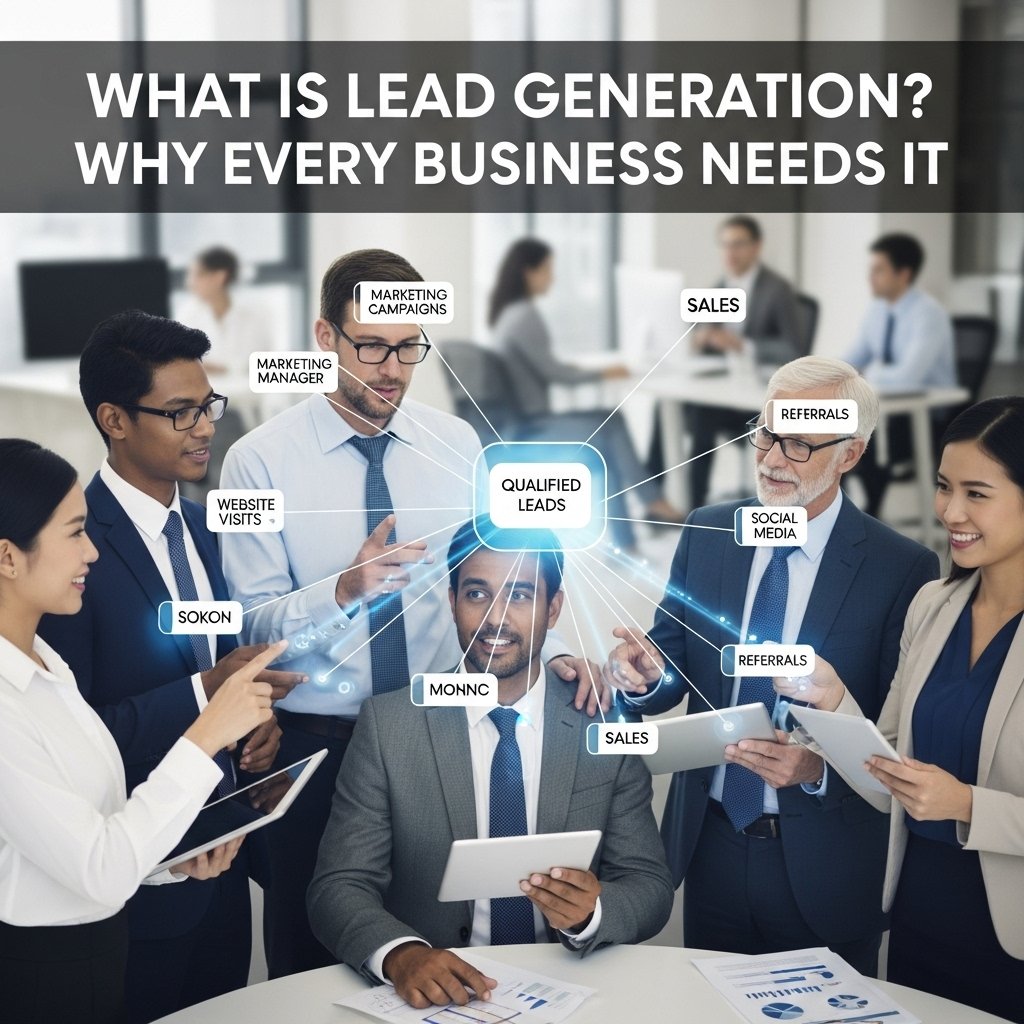
Lead generation is one of the most important parts of digital marketing. Whether you run a local service business, an online store, a consulting firm, or a digital agency, your growth depends on one thing:
New, qualified leads coming in consistently.
This complete beginner-friendly guide explains what lead generation is, how it works, why every modern business needs it, and how you can start implementing it—even with zero experience. The content is written in a simple, clear, and business-focused tone, perfect for clients, entrepreneurs, and digital marketing beginners.
Introduction: What Exactly Is Lead Generation?
In simple words, lead generation is the process of attracting potential customers and encouraging them to show interest in your products or services.
A lead is anyone who:
-
Visits your website
-
Fills out a form
-
Sends a message
-
Asks for a quote
-
Calls your business
-
Downloads a guide
-
Signs up for a newsletter
Lead generation = bringing these people in consistently.
It’s the first step in turning strangers into customers.
Simple Example:
A visitor lands on your website looking for “website design services.”
They fill out your contact form.
That person becomes a lead.
When done correctly, lead generation becomes the engine that keeps your business growing every month.
Why Lead Generation Matters for Every Business
You cannot scale a business without leads.
You cannot sell without leads.
You cannot grow profits without leads.
When you understand lead generation, you unlock predictable business growth.
Let’s break down the key reasons why every business—small or large—needs a strong lead generation system.
1. Leads Are the Lifeblood of Sales
Without leads, your business stagnates.
More leads = more opportunities to close sales.
A predictable flow of leads gives your sales team (or yourself) people to talk to every day.
2. Leads Turn Cold Traffic Into Warm Prospects
Most people don’t buy the first time they see your brand.
Lead generation collects their information so you can follow up.
Example:
-
They download an ebook
-
Join your email list
-
Book a call
Now you can nurture them until they’re ready to buy.
3. Lead Generation Reduces Marketing Costs
Paid ads alone are expensive.
SEO alone takes time.
But lead generation systems can:
-
Convert more visitors
-
Reduce customer acquisition costs
-
Improve overall marketing ROI
Every lead captured is a new opportunity without extra ad spend.
4. Leads Build Long-Term Customer Relationships
When you capture leads, you can:
-
Email them
-
Send offers
-
Share updates
-
Build trust
This makes customers more likely to buy again in the future.
5. Leads Help You Understand Your Audience
Lead generation data shows:
-
What people want
-
What problems they have
-
Which products they’re interested in
-
What offers convert best
This helps you improve your marketing and sales strategies.
6. Leads Create Predictable Revenue
Businesses that struggle usually lack consistent leads.
Businesses that grow fast usually:
-
Have automated lead capture
-
Use predictable funnels
-
Nurture leads effectively
Lead generation builds predictability.
7. Lead Generation Is Essential for Scaling
Once you have a working lead generation system, you can scale your business by:
-
Running more ads
-
Improving your offers
-
Adding automation
-
Expanding your services
Scaling becomes much easier when leads are flowing consistently.
How Lead Generation Works (Simple Breakdown)
Lead generation happens in stages. Understanding these steps helps you build a strong strategy for your business.
Step 1 — Attract the Right Audience
Before generating leads, you need traffic. You can attract potential customers through:
-
SEO (ranking on Google)
-
Social media content
-
Paid ads
-
Blog articles
-
YouTube videos
-
Email campaigns
-
Referrals
Attraction is the first step.
Step 2 — Offer Value to Capture Leads
Once someone visits your website or landing page, give them a reason to share their information.
These offers are called lead magnets.
Examples:
-
Free consultation
-
Free audit
-
Ebook or checklist
-
Webinar
-
Discount
-
Free trial
-
Strategy call
The more valuable your offer, the higher your conversions.
Step 3 — Capture Their Information
You use forms, landing pages, or chatbots to collect:
-
Name
-
Email
-
Phone number
-
Business details
-
Service requirements
A visitor becomes a lead the moment they share information.
Step 4 — Nurture the Lead
Most leads don’t convert immediately.
Nurturing helps build trust through:
-
Emails
-
Calls
-
Chat follow-ups
-
Retargeting ads
-
Helpful content
-
Personalized offers
This warms them up until they’re ready to buy.
Step 5 — Convert the Lead into a Customer
When nurtured correctly, leads feel confident and ready to purchase.
A conversion could be:
-
Booking a service
-
Buying a product
-
Scheduling a consultation
-
Signing a contract
Your lead generation process directly impacts your sales results.
Types of Lead Generation (Beginner-Friendly Overview)
Lead generation comes in two main categories.
1. Inbound Lead Generation
You attract leads naturally through value and content.
Examples:
-
SEO
-
Social media posts
-
Blog articles
-
YouTube videos
-
Email marketing
-
Lead magnets
Inbound leads trust you more because they came to you.
2. Outbound Lead Generation
You reach out to potential customers directly.
Examples:
-
Cold emailing
-
Cold calling
-
LinkedIn outreach
-
Paid ads
-
SMS campaigns
Outbound can generate leads quickly, especially for service businesses.
What Makes a Lead “Qualified”?
Not all leads are equal. Some are ready to buy now, others are just browsing.
A qualified lead:
-
Needs your service
-
Has the budget
-
Has the authority to decide
-
Has a real problem you can solve
Example:
Someone searching for “digital marketing agency for small business” is a much higher-quality lead than someone reading general marketing news.
Lead Generation Examples for Beginners
Here are simple examples to help you understand how lead generation works across industries.
Example 1 — Digital Marketing Agency
Lead Magnet: Free website audit
Lead Capture: Landing page
Nurturing: Email sequence with tips
Conversion: Book a strategy call
Example 2 — Local Service Business
Lead Magnet: Free quote
Lead Capture: Contact form
Nurturing: WhatsApp follow-up
Conversion: Service appointment
Example 3 — E-Commerce Business
Lead Magnet: 10% discount code
Lead Capture: Pop-up form
Nurturing: Product recommendations
Conversion: Purchase
Example 4 — Coaching or Consulting
Lead Magnet: Free training / webinar
Lead Capture: Registration form
Nurturing: Email reminders + value content
Conversion: Paid coaching program
5–7 Practical Lead Generation Strategies for Beginners
Here are the most effective and beginner-friendly methods you can use today.
1. Create valuable content
Blog posts, guides, checklists, and tutorials attract organic traffic.
2. Offer a strong lead magnet
Give users something valuable in exchange for their information.
3. Use optimized landing pages
A focused landing page converts much better than a regular homepage.
4. Run targeted ads
Facebook, Instagram, Google, and LinkedIn ads can generate leads instantly.
5. Add forms and CTAs across your website
Strategically place:
-
Contact forms
-
“Get a Quote” buttons
-
Pop-ups
-
Chatbots
6. Use email marketing to nurture leads
Send helpful content and offers to warm leads over time.
7. Use AI automation for follow-ups
AI chatbots, automated emails, and SMS follow-ups increase conversions without extra effort.
Benefits of Lead Generation for Every Business
Here’s a quick list of why lead generation is essential:
-
Increases brand visibility
-
Brings consistent potential customers
-
Improves marketing ROI
-
Helps you understand your audience
-
Builds authority and trust
-
Allows you to scale faster
-
Creates a predictable revenue system
Conclusion
Lead generation is the engine that drives modern business growth. Whether you’re a startup, service provider, or established brand, you need a reliable system to attract, capture, and convert leads consistently.
When you master lead generation—even at a beginner level—you gain control over your growth, your revenue, and your future.
It’s not about chasing customers.
It’s about creating a system where customers come to you.